
 Skip to content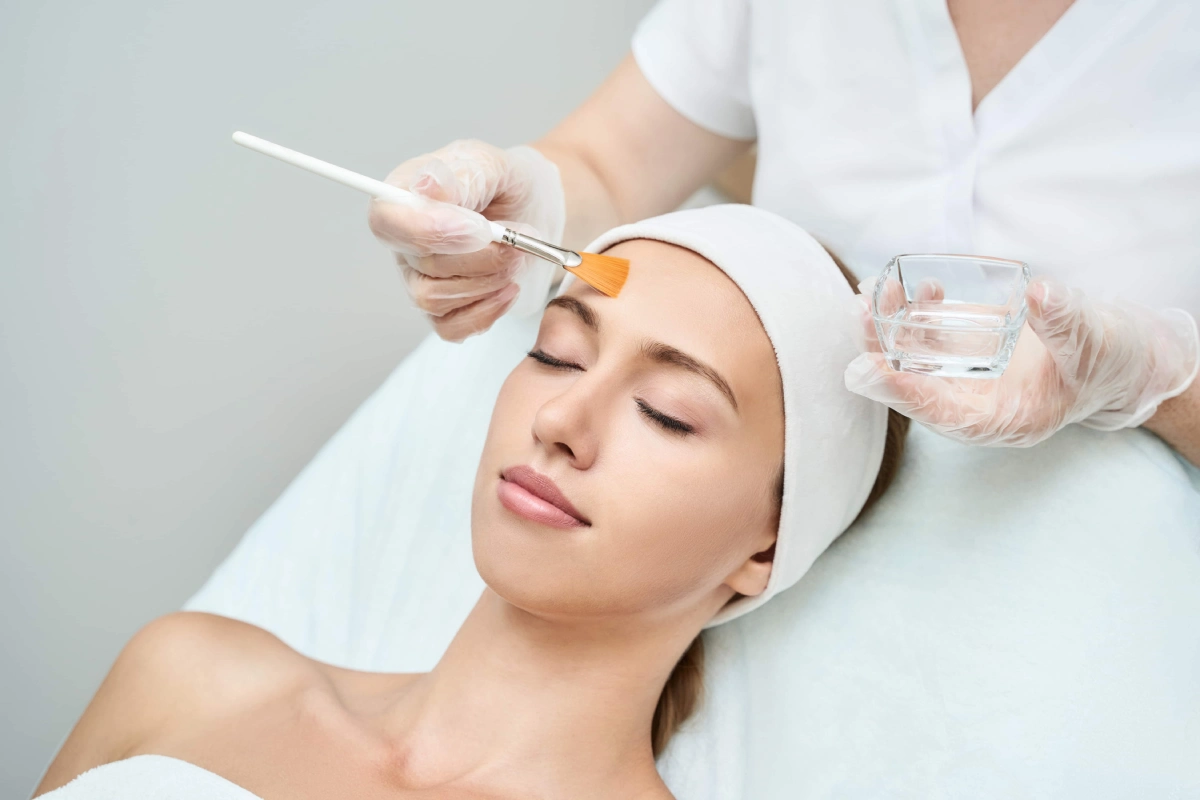
If you’ve noticed dark patches, uneven tone, or stubborn spots after a summer spent outdoors, you’re not imagining it, and you’re not alone. Sun exposure is one of the most common reasons skin loses its even tone, and the warmer months make it worse. The good news is that this discoloration responds well to treatment. Chemical peels are one of the most effective ways to fade sun-induced pigmentation and bring back a clearer, brighter complexion.
At Meraki Aesthetics and Wellness, we offer customized chemical peels for hyperpigmentation and sun spots in Cornelius, NC, designed around your skin type and concerns. Here’s how peels work as sun damage correction in Fort Mill, SC, what to expect, and how to keep your results lasting.
Here’s what’s happening: the more sun you get, the more melanin your skin produces, so the spots you already have darken and new ones surface over the summer. A chemical peel works against that. It uses a controlled acid solution to exfoliate the pigment-holding outer layers, which lets healthier, more even skin show through. The right peel strength depends on your skin type, and you’ll usually see the most improvement from a series of treatments backed up by daily sun protection.
Sun spots and hyperpigmentation form when UV exposure triggers your skin to produce excess melanin, the pigment that gives skin its color. Over time, that pigment clusters unevenly and shows up as the dark patches you see in the mirror.
Summers in Fort Mill, SC, and across the greater Lake Norman area make this especially common. Long daylight hours, weekends on the water, and time outdoors all add up to cumulative UV exposure that deepens existing spots and surfaces new ones, even when you’re being careful.
Not all discoloration is the same, though. Sun spots come directly from UV damage. Post-inflammatory hyperpigmentation is the mark left behind after a breakout or irritation heals. Melasma is a hormonally influenced pattern that behaves differently and tends to be more persistent. They can look similar, but the right approach depends on which one you have, which is why a professional assessment matters before starting any facial peel for discoloration.
A chemical peel applies a controlled acid solution that exfoliates the pigment-holding outer layers of your skin. As those damaged surface cells shed, healthier and more evenly toned skin emerges underneath. This is what makes a peel such an effective skin brightening treatment for sun damage.
The depth of the peel is matched to your concern. Lighter formulas focus on the surface and suit everyday pigmentation and seasonal upkeep, while medium-depth peels reach further for more established discoloration. At Meraki Aesthetics and Wellness, every peel is selected based on a skin analysis rather than a one-size-fits-all formula.
What sets this apart from a topical product that sits on the surface is that a peel targets pigment at the layers where it lives. Instead of masking discoloration, this exfoliation treatment for glowing skin in Cornelius, NC encourages genuine cell turnover, so the improvement you see is your own healthier skin coming through.
Some pigmentation should be looked at by a provider before any cosmetic treatment. A spot that is new, changing in size or shape, or irregular in color deserves a professional eye first. This is about your skin health, not just your complexion, and it comes before resurfacing.
Melasma is another reason to start with an evaluation. It needs a managed, long-term approach rather than a single fix, and an overly aggressive peel can sometimes make it worse. Because it can mimic ordinary sun spots, it’s easy to treat the wrong way without realizing it.
This is what a professional skin analysis is for. During your consultation, your provider determines whether a peel is the right tool for your pigmentation or whether your skin would do better with a different plan.
Daily broad-spectrum sunscreen is the single most important habit for keeping pigmentation from returning. Unprotected exposure can undo your progress faster than treatment can build it, so wear it every day, even when it’s cloudy.
Beyond sunscreen, a gentle and consistent routine protects your results between sessions:
These habits won’t replace professional treatment, but they make a real difference in how long your results hold.
Most patients see visible peeling begin within 48 to 72 hours of treatment, with smoother, brighter skin emerging over the days that follow. Pigmentation tends to fade gradually rather than all at once, so patience pays off.
A few honest expectations worth setting:
Each session builds on the last, and consistent sun protection is what allows that progress to add up as a reliable treatment for dull and damaged skin.
Whether a peel is right for you is determined by your Fitzpatrick skin type and a provider assessment, not by a blanket promise that it’s fine for everyone. Your provider uses this scale to understand how your skin is likely to respond and choose the safest, most effective approach.
For deeper skin tones, this step is especially important. Richer complexions carry a higher risk of post-inflammatory hyperpigmentation, so acid selection and concentration are chosen carefully to lower that risk. A thoughtful, conservative peel that respects how your skin behaves will almost always serve pigmentation better than a stronger one.
You don’t have to live with the spots and uneven tone that summer leaves behind. With a customized treatment plan, clearer and more balanced skin is within reach. If you’re ready to address sun damage and hyperpigmentation, the team at Meraki Aesthetics and Wellness is here to help. Say goodbye to summer sun spots. Book your chemical peel session today at our Fort Mill, SC, location for a personalized skin analysis and a plan built around your goals.